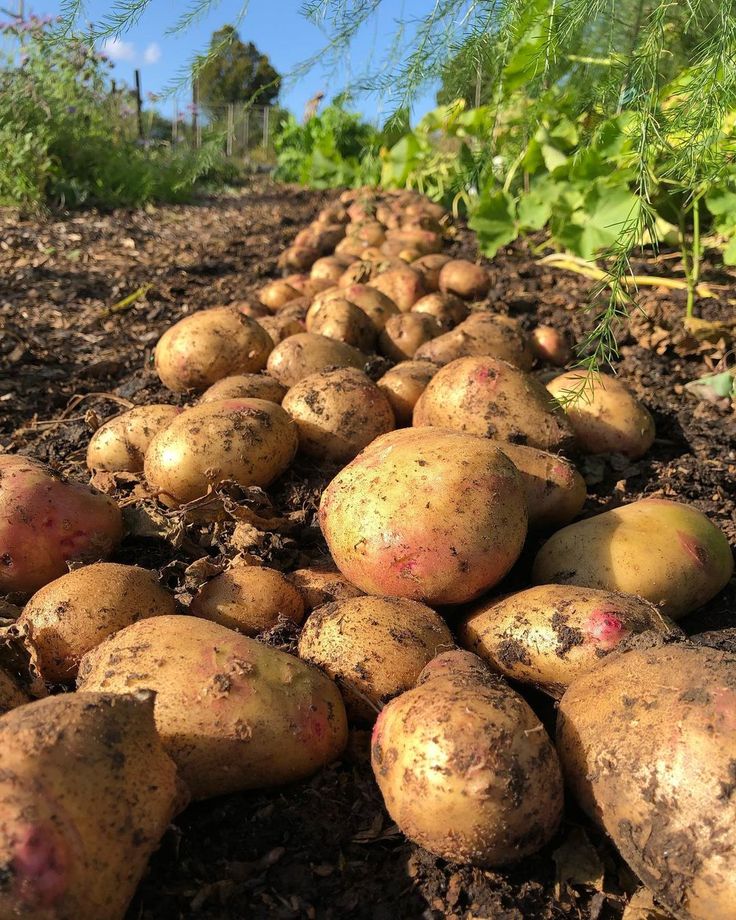
Dehaulming
This is the removal or destruction of the haulm (the plant part above the ground level) to allow the skin to harden and reduce damage to the tubers during harvest. It improves the storability of potato tubers and prevents diseases from spreading from the plant stem to tubers especially viral diseases, late blight and stem rot.
For plants infected with bacterial wilt, it is too risky to assume that the infection has not spread to the tubers simply by removing the haulm. The infected plants should be removed totally (roots, stems and tubers) and destroyed.
When and how to dehaulm:
De-haulm is done two weeks before harvesting when the crop has attained physiological maturity and at least 50% of the haulms have started to turn yellow. This can be done using hand tools or uprooting the entire stems from the ground or use of herbicides as described below.
When the potato crop is dehaulmed it is easier to detach the tubers from the stolons at harvest, resulting in less tuber damage.
1. Cutting of the base of the stem: This is done using hand tools like slashers to cut off the stems at ground level. Although this method saves on labor, it has limitations as some varieties may start growing /sprouting after slashing. The result being an increased risk of virus spread from infected to healthy plants, where the cuts above ground can act as entry points for plant pathogens, which may later spread to the tubers. Also the tools used may spread disease pathogens from unhealthy to healthy plants during the dehaulming process.
2. Pulling off stem and roots: This involves stepping on the base of the plant with both legs such that the plant is in between your legs and pulling out the stem and roots carefully. If the process is not properly done, the tubers may be exposed to the sun and/or PTM attack. without exposing the tubers. This procedure is highly recommended but may be tedious.
Harvesting
Untimely and poor lifting, handling and storage of potato tubers leads to infestation with PTM or infection with disease causing pathogens and thus tuber damage.
Potato tubers are highly perishable (easily deteriorate in quality) due to their high moisture content (about 80% water), and if not handled properly after harvesting one may experience 20-45% losses.
When and how to harvest:
Determine if the plant has matured and is ready for harvesting, by first uprooting some plants at random, examining the tubers and rubbing the ends to see if the skin peels off easily or it has hardened.
This technique for determining tuber maturity and skin set is known as the ‘Thumb Test”; thumb pressure and lateral force are applied to the skin. When the skin does not slip readily, the tubers are deemed to have achieved skin set and may be safely harvested.
Harvesting tips:
• Harvest when the soil is dry.
• Harvest when it is relatively cool with cloud overcasts.
• Do not expose harvested tubers to sunlight for a long time so as to prevent them from drying out too quickly, and avoid greening of the white skin varieties, which would reduce their keeping quality and consumer acceptance.
• Avoid harvesting when the soils are wet in order to avoid pathogens sticking on tubers.
• Shield harvested tubers from rain to avoid the risk of rotting.
• When packaging into bags ensure you fill the bags half way for ease of lifting and transporting from the farm.
Methods of harvesting
Hand harvesting
Steps in harvesting by hand
Uproot/ lift the tubers by using hand held hoes or 2-pronged sticks after the haulms
are completely dry.
Using sticks or fork jembes dig out any tubers that could be stuck in the ground
along the ridges or furrows.
After harvest, ensure the soil on the tuber is dry before transporting the tubers; soil could spread diseases or pests in the store. The soil as well restricts the movement of oxygen through the pile, inducing anaerobic conditions and consequent tuber rotting.
Mechanized harvesting
A mechanized harvester can also be used to harvest the tubers and this saves on time and labor costs. Adequate skin set is crucial to prevent mechanical damage to the tubers. The machine should be used with care to avoid severe tuber bruising, which results in blackening of the flesh underneath the bruise area.
Sorting and Grading
Select and remove the damaged/bruised, diseased, deformed tubers and any other foreign material including soil clods.
All damaged and cut tubers should be removed after harvesting to discourage infestation by PTM and rotting in the case of cut tubers. Grading should be carried out to separate the ware (for consumption), seed (for planting) and chats (small and immature potatoes. It is advisable that each bag is well labeled according to variety description and weight for ease of identification.
Curing
Up to 80 % of potato tuber content is water and this needs to be maintained to avoid loss of weight and quality. A warm temperature in the shed or holding area before storage is desirable as it promotes wound healing and further skin set. The shed area should be well ventilated to allow good exchange of air and to achieve good temperature control. High humidity of 85 to 90% is essential for optimum wound healing and curing of the tubers.
Storage
The potato tuber is a living entity and it continues to respire in storage, this means that the starch is broken down to simple sugars and in turn they are broken down to carbon dioxide and water. An effective storage management protocol will slow this process down but it cannot be stopped completely. When the process is allowed to proceed rapidly, tubers lose weight through the pores on the skin developing a shriveled appearance.
If storage is anticipated to be for a long period (longer than 5 months), the tubers must be stored at temperatures of between 4°C to 8°C in dark cool conditions to prolong dormancy.
Good storage conditions/requirements include; Cool, dry, dark and well ventilated store room.
Good storage conditions and practices ensures that;
Tubers are alive
Minimized deterioration through natural process of starch breakdown
Reduce storage pest infestation and damage
Reduce post-harvest losses through rotting
Reduces potato greening
Increases tuber dormancy period
The store should be sprayed with insecticides to kill tuber moth adults. Spread the tubers on crates and turn them once a day to prevent spoilage. Also you can place Mexican marigold or Eucalyptus leaves to act as repellants.
Tuber Quality
When referring to potato tubers, the term quality can be defined as “the suitability of the tubers for the intended end use”. While the market for potatoes becomes more sophisticated, the quality criteria also become correspondingly sophisticated. Since potatoes are primarily a foodstuff, nutritional quality is of prime importance. As the demand for processed products grows, processing quality assumes greater importance.
Tuber quality is influenced by the fact that the potato is maintained in a fresh state throughout its existence, constantly respiring and exposed to physiological and environmental influences during both the field growth stage and during storage.
In crops destined for direct consumption, nutritional value is a major quality attribute.
The nutritional value of potato tubers is influenced by several factors:
Soil factors, pH, Available nutrients, Texture, Organic matter content Soil-water relationships, Fertilizer applications, Cultural practices, Weather and climatic factors, including temperature, rainfall and light intensity, Crop variety, Postharvest handling and storage practices.
In crops destined for processing, dry matter and specific gravity are considered the major quality attributes. Dry matter content has been shown to influence the texture of boiled or baked tubers and the quality and yield of fried potato pieces. Processors require tubers with high dry matter content, as this produces a product with higher consumer acceptability. Consumers prefer French fries, which are light in color, crisp on the outside, fluffy or mealy on the inside and having a minimum of oiliness.
Similarly, high quality potato crisps are light in color and absorb a minimum of oil during frying. Lower dry matter potatoes are costly to process because more water must be fried out of lower dry matter potatoes to meet minimum quality standards.
More potatoes must be processed to produce the same volume of product and the longer the frying time results in potatoes absorbing more fat. Low reducing sugar content, associated with tubers grown to maturity is also desired, as this does not produce the dark brown fry colors and the associated bitter taste of the cooked product.
Specific gravity is widely used as an alternative quality attribute of tubers and is quick and easy to measure. It is used as an estimate of the solids or dry matter content of tubers. The higher the dry matter content, the lower the water content and the higher the specific gravity. The specific gravity of a tuber depends not only on the percentage of dry matter in it but also on the density of the dry matter and the percentage of air in the tissue.
The following formula is used to calculate specific gravity:
Specific gravity = (weight in air)
[(weight in air) - (weight in water)]
There is a close relationship between dry matter content and specific gravity and over the range normally observed in potato tubers (14% to 28%) the relationship can be considered as linear.