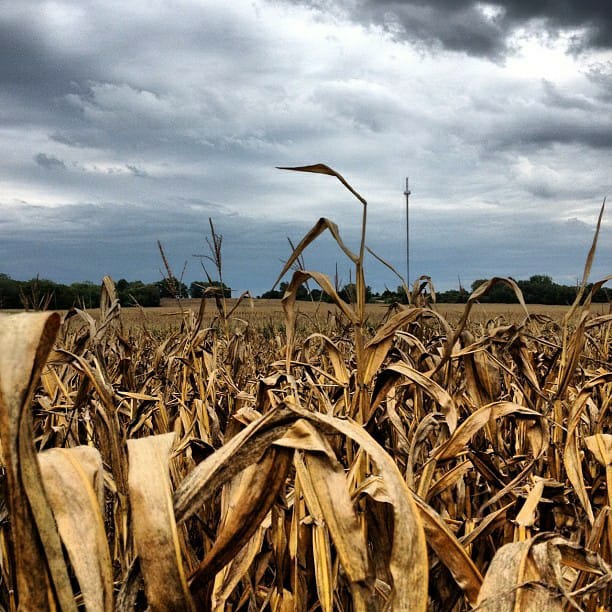
Agriculture is a major contributor of emissions of greenhouse gasses in addition to other sources. The sector accounts for about 12 percent of annual global GHG emissions, and is the largest human activity source of methane and nitrous oxide emissions; two potent GHGs with global warming effect. According to UNEP global methane assessments, agriculture is the single largest contributor to global methane emissions. In 2022, agricultural processes, such enteric fermentation and manure management, emitted 4.6 billion metric tons of carbon dioxide equivalent (GtCO₂) methane. This accounted for roughly 41 percent of total methane emissions that year.
What are some of the current practices in the agriculture sector that result in climate change?
Deforestation and Conversion of Grasslands to Agricultural Areas
The clearing of forests and natural grasslands for farming activities leads to the release of stored carbon dioxide into the atmosphere. Trees act as carbon sinks, and their destruction reduces the carbon sequestration resulting in excess CO₂ in the atmosphere, contributing to global warming.
Overexploitation of Natural Resources
Unsustainable use of soil, water, and other natural resources without appropriate conservation techniques leads to environmental degradation. Over-irrigation can deplete water sources, and poor soil management leads to erosion and the loss of soil fertility, both of which contribute to increased greenhouse gas emissions.
Monocropping and Year-Round Staple Crop Production
The continuous cultivation of the same crops throughout the year, especially without crop rotation, reduces biodiversity and depletes soil nutrients. This practice increases dependency on chemical inputs, reduces resilience to pests, and weakens the ability of the land to sequester carbon.
Increased Use of Synthetic Fertilizers, Pesticides, and Herbicides
The use of inorganic fertilizers releases nitrous oxide (N₂O) into the atmosphere. Additionally, the excessive application of pesticides and herbicides contributes to soil degradation and pollutes water systems, further reducing the capacity of ecosystems to act as carbon sinks.
Use of Fossil Fuel-Dependent Farm Machinery
Excessive use of farm machinery, such as tractors and harvesters, relies heavily on fossil fuels, leading to significant emissions of carbon dioxide (CO₂) and other harmful gasses. These emissions contribute directly to global warming and air pollution.
Post-Harvest Losses and Wastage
High post-harvest losses result in the wastage of food resources resulting in huge landfills. Additionally, rotting organic waste from crops, particularly in the landfills, produces methane, a powerful greenhouse gas.
Crop residues
When crop residues, such as stalks, leaves, and husks, are left over after harvest, they can contribute to greenhouse gas (GHG) emissions if left poorly managed. One common practice is burning crop residues, which releases carbon dioxide, methane, and nitrous oxide into the atmosphere.
Research has shown that rice paddy fields are significant contributors to greenhouse gas, particularly methane, which is released during the anaerobic decomposition of organic matter in the rice fields.
In addition, the livestock sector plays a major role in GHG emissions, with methane being a key short-lived climate pollutant (SLCP). SLCPs, such as methane, have a shorter atmospheric lifespan compared to carbon dioxide but have a much greater impact on global warming. Livestock contributes to methane emissions primarily through enteric fermentation, a digestive process in ruminants, and through manure left on pastures, which further releases methane and nitrous oxide during decomposition.
NB: Enteric fermentation in livestock is a major contributor of methane emissions in the agriculture sector.
Lesson 2: Impact of Climate Change in Agriculture
Climate change has numerous direct or indirect effects on agriculture and corresponding livelihoods. This section will consider agriculture to include the production of crops, livestock, forestry, fishery, and aquaculture. Agriculture is the backbone of the economy of many Sub-Saharan countries, employing between 66 to 90% of citizens directly or indirectly. In Kenya for example, 80% of the food basket is provided by smallholder farmers. Understanding the impact of climate change on agriculture is vital for spearheading regional-level discussions and designing policy interventions and adaptation strategies for the realization of resilient livelihoods. Even though climate change is a global phenomenon, the manifestation is site-specific and therefore the training has to adapt to the priority needs of a locality condition.
In Kenya, the most outstanding example is outstanding variability in the onset, duration, intensity, etc. of rainfall during a cropping season. There have been intense cases of dry spells, drought, or even flooding in some regions of Africa. Quite often, this unpredictability in weather conditions is often accompanied by outbreaks of pests and disease, destruction of animal grazing lands through severe erosion, and so on.
Consequently, cases of severe food insecurities have been reported in many countries in the region as the yield output of most crops is usually described. In contrast, the warming up of other regions where cooler temperatures previously limited crop productivity have reported increased yield output of staple crops. The latter, however, is rarely reported in tropics and subtropical regions.
The effects of climate change on crop productivity are likely to adversely affect lowlands more than highland farmers. Simulations reported by FAO, (2016) have indicated that the yield of maize, wheat, and rice crops in these regions could exhibit a decline of up to 45, 50, and 30%, respectively. The effects are even more exuberated in livestock where they manifest through poor feed quality or absence of sufficient feed, poor animal health, and productivity. Poor distribution and intensity in regions cause waterlogging and acute droughts, which translate to limited feed sources and disease outbreaks. Higher temperatures have been associated with poor feed intake and increased susceptibility to pathogen attack as a result of heat stress. This translates to poor animal productivity and shifts in the spread of animal diseases.
Fluctuating water body temperatures inhibit the breeding of fish, especially in the tropics where acute effects of climate change have been reported. Farmers will have to invest in cooling systems to keep temperatures in their fish ponds below limiting levels, Higher water temperatures can drastically reduce the concentration of oxygen in the waters. Climate change has also been associated with decreasing the quality of forest cover in sub-Saharan Africa. Specifically, tree mortality and decline in orchard productivity significantly increase with the increase in rainfall variability. This has been associated with drought and heat stress, pest resurgence, and fire outbreak.
Simulation studies have shown that lowlands are more affected than highlands, with tree species originally inhabiting these regions already showing a migratory trend towards uplands. This is likely to confer irreversible influence on the natural ecosystem as the dependence on communities will not shift at a similarly high rate. It will also cause adverse effects on the livelihoods of communities depending on some of these tree species in the lowlands. For instance, the effects of climate change and human poaching on sandalwood trees has reduced their population to highly endangered levels in Kenya's natural ecosystem.
In summary the following are the major effects of climate change on agriculture:
Reduced crop and livestock productivity due to changing weather patterns and extreme temperatures.
Increased frequency of weather shocks, such as floods, droughts, and heatwaves, which affects agricultural activities.
Outbreaks of pests and diseases, exacerbated by shifting climate conditions, threatening crop and livestock health.
Increased crop and livestock mortality, as extreme weather events and environmental stress affect their general health.
These effects contribute to long-term challenges such as food insecurity, unsustainable livelihoods for farmers who rely solely on agriculture, instability in national economic growth, and an increased dependency on food imports as countries struggle to meet their own food production needs.