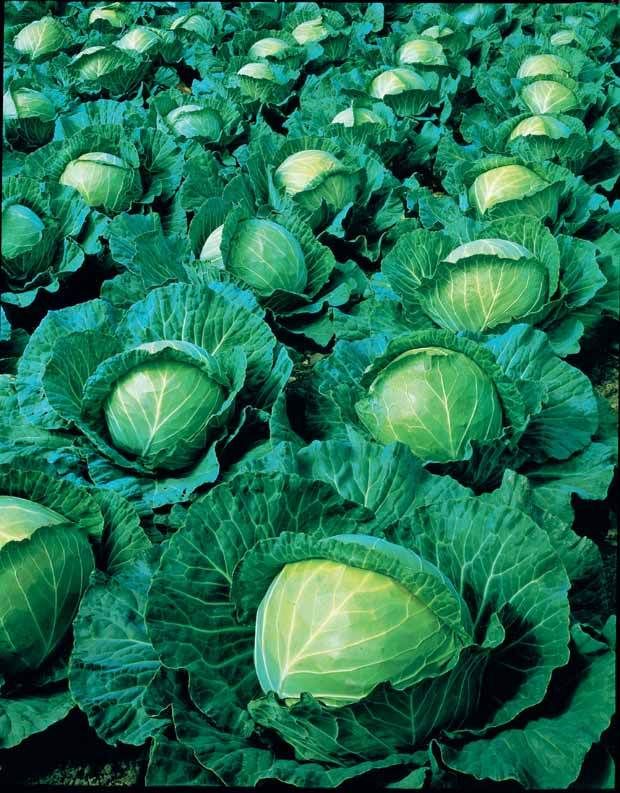
Cabbage (Brassica oleracea var. capitata) is one of the most widely cultivated vegetables in Kenya. It is highly nutritious, being a rich source of Calcium, Iron, Vitamin A, Vitamin E, Minerals, Riboflavin, Vitamin B3 (Niacin) and Vitamin C (Ascorbic Acid). Cabbage is grown primarily in the cool highland regions, where the climate is ideal for its growth. Smallholder farmers are key players in cabbage production, and the crop provides both food security and income opportunities. In Kenya, cabbage growing is done on a small scale and also large scale farming. Sustainable cabbage farming practices are essential to maintain high yields while addressing challenges such as pests, diseases, and market fluctuations.
Climate and soil requirement for optimal cabbage production
Cabbage thrives at altitudes between 700 and 2,200 meters above sea level.
Cabbage requires a significant amount of water, at least 500 mm of rainfall that is evenly distributed throughout its growth period.
Cabbage is a cool weather crop that can germinate at a soil temperature of 4°C and optimum temperatures of between 18°C and 24°C.
Optimum temperature for growth: 18°C
Average maximum temperature for growth: 24°C
Average minimum temperature for growth: 4.5°C
Cabbage is a frost resistant crop.
Soil requirements include:
Well drained loamy soil with an effective rooting depth of about 600mm.
Soil pH of 5.5 to 7.5 pH.
Organic matter content.