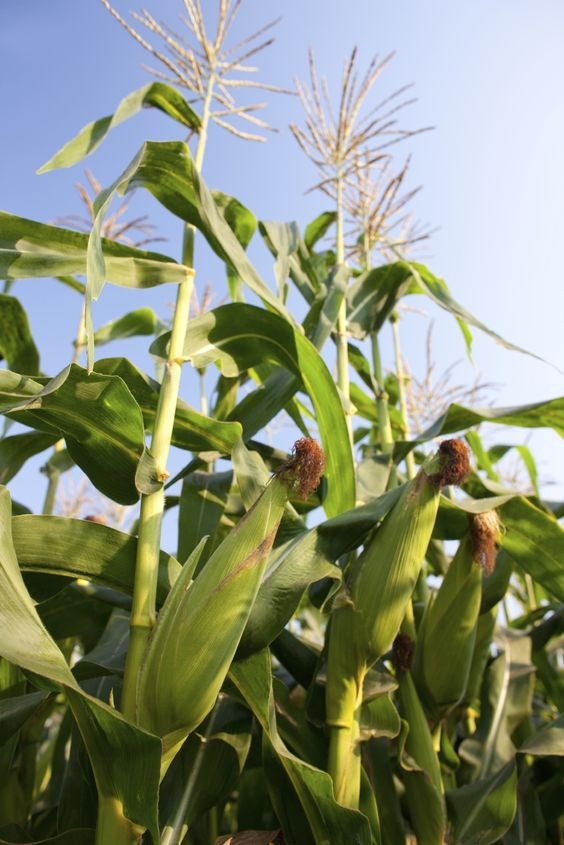
Harvesting
Harvesting should be done as soon as possible once the maize has shown maturity signs to reduce further losses that may be associated with insect infestation or unfavorable weather conditions such as occurrence of frequent rainfall.
However, you can let the maize stand in the field for prolonged periods after physiological maturity, by stooking for 2 to 4 weeks, to facilitate faster drying. When left in the field, the maize will be ready for harvesting when the cob starts drooping.
Maize is considered physiologically mature when:
Majority of the leaves have dried up.
Cob husks and stalks have turned from green to yellow or brown.
Cobs start drooping on the maize stalk.
Existence of a black layer at the point of seed attachment to the cobs.
Hardened grains that do not produce milk upon pressing.
Cobs are unsuitable for roasting.
Harvesting tips:
Avoid harvesting maize on rainy days to prevent rotting in storage and mycotoxin contamination.
Avoid heaping maize on the soil surface at the time of harvesting to avoid exposing maize to infection with mycotoxin causing fungi such as Aspergillus spp. And Fusarium spp. Avoid exposing maize cobs to bare soil during maize harvesting.
Sufficient preparation is required before initiation of harvesting. Equipment for harvesting, transportation means, drying, threshing, post-harvest treatment for storage, storage materials and storage rooms must be ready before harvesting.
It is essential to thoroughly clean the stores and get rid of all storage bags and remnants of produce from the previous cropping season from stores prior to harvesting.
Spraying of wooden storage containers with appropriate chemicals to reduce pests like larger grain borers that can survive on such structures is mandatory. Ensure spraying all cracks and crevices and seal potential areas of rodent entry.
Avoid combining new produce with produce from previous harvesting. Combination will result in post-harvest pest migration from old to new produce which will exuberate pest damage.
Hand harvesting is the most ideal method for small scale farmers. The maize stalk can be cut by a panga or sickle and stook in the field to facilitate faster drying or carried to the store. The cobs are then later dehusked from the stalks once they dry up. Alternatively, drooping cobs can be directly dehusked from maize stalks that are still standing in the field and carried to the store.
Transportation
Harvested maize can be transported home using diverse means such as motorbikes, wheelbarrows, bicycles, vehicles etc. It is prudent to select a transportation system that will cause minimal damage to the cobs.
Drying maize
Initially, maize must be dried on cobs prior threshing, further drying and storage. Cob drying should be done by spreading the maize on a tarpaulin, mat or cribs to avoid exposing the maize in direct contact with the soil. The dried cob maize is either hand threshed, or machine threshed then further exposed to sun in a mat to reduce the moisture to approximately 13%. Spreading the maize in a single layer, exposed to the sun fastens the process of drying for both cob and threshed maize.
NB: Threshing or shelling to separate the grains from the cobs must be performed with care to avoid damaging the grains. Damaged grains are highly susceptible to insect pests or fungal attack.
For best results, shell the maize when they are at 14 to 15% moisture contents.
Methods to assess water content in threshed maize
Biting the maize grain or tightly squeezing it. If the grains fail to break easily, then the maize is ready for storage.
Salt test; the salt method only indicates that the moisture content is either above or below 15%.
Step 1: Dry the salt first in the sun or oven until it gets very hard before use. The ideology in support of this method is derived from the fact that salt is hydroscopic in nature and will absorb moisture from grain that has more than 15% moisture content.
Step 2: Mix the salt and grain in an airtight container, shake vigorously for one minute and let the container stand for 15 minutes.
Step 3: After the settling time, check to see if salt has stuck to the sides of the container. If the salt sticks to the side of the container, then the grains possess more than 15% water content and have to be dried further. If the salt does not stick, then the grain has less than 15% moisture content.
Moisture meter; A farmer can also use a moisture meter to determine the grain’s moisture content. One of the most ideal moisture meters that is commercially available is Dickey-John multi-grain moisture tester. For this tester, all you need to do is place approximately 150 grams of grain into the device, close it and set it to stand for a few seconds. It will display the moisture content reading of your maize on a display screen. Because of their high prices, a moisture meter can be purchased by farmer groups or any other service provider that would offer the service at a small fee.
Cleaning maize after drying.
Cleaning of maize grains after harvesting involves removing the physical impurities like stones, husks, dust etc. through winnowing. Cleaning grains helps improve the grade and quality and significantly boost prices.
Treatment for Storage
Application of post-harvest storage treatments should be done to minimize product loss due to pest damage while in the stores. There are several products that a farmer can use to treat their produce before storage to manage storage pests. If left uncontrolled, postharvest pets can result in up to 70% produce loss. The losses arise from feeding on the nutritious parts of the maize grain, producing fecal matter, dead larvae/pupa covers/dead adults that makes the food unfit for human consumption.
Some of the commercially available products and the corresponding active ingredients, in brackets, that are currently registered for management of postharvest management for storage insect pests of maize include:
Actellic Super dust (Pirimiphos-Methyl 1.6% + Permethrin (40/60 cis/trans) 0.3%)
Actellic Gold Dust (Thiamethoxam 3.6g/Kg + Pirimiphos Methyl 16g/kg)
K-OBIOL DP2 Dustable powder (Deltamethrin 2g/kg)
KENSIL DUST Wettable Powder (Silicone dioxide 840 g/kg)
Follow the instructions on the product packaging in applying the respective treatment product.
Ensure to observe the minimum allowable time the product must last after treatment before it is ready for consumption.
Storage
Storage of shelled maize is as important as any other maize production process along the value chain. There are several techniques for maize storage, which also differ in level of effectiveness.
The key to achieving excellent product storage depends on the condition and maintenance of the storage facility, including the containers, the warehousing and the quality of grain being stored.
For optimal results, ensure that your products are dried to the recommended moisture level of 13%, clean and free of any damaged or rotten grains. The storage facility should be raised, well ventilated, located away from moldy places in a cool and dry environment. The necessary precautions should be installed to keep off rodents and other pests.
Traditional open weave sack made of polypropylene, sisal and jute: You can store your produce in these products for a period of up to 6 months, when necessary, rodent proof measures and insect pest protectants have been considered.
Hermetic plastic bags: These products offer sufficiently satisfying results for small scale farmers that lack the money to buy more durable and stronger storage containers. They can hold produce for between 3 to 12 months when measures to control rodents have been put in place. They eliminate pests through suffocation and thus no need for insecticides.
Hermetic plastic drums: The drums operate following similar principles to hermetic bags. They can store maize for up to 12 months. You can add insecticide for pest control.
Metal silos: These are durable, reusable storage containers that can store your maize for up to one year. They manage pests through exclusion though you can add post-harvest, pest management pesticides for control of pests previously introduced in the field.